
 Save to Pinterest
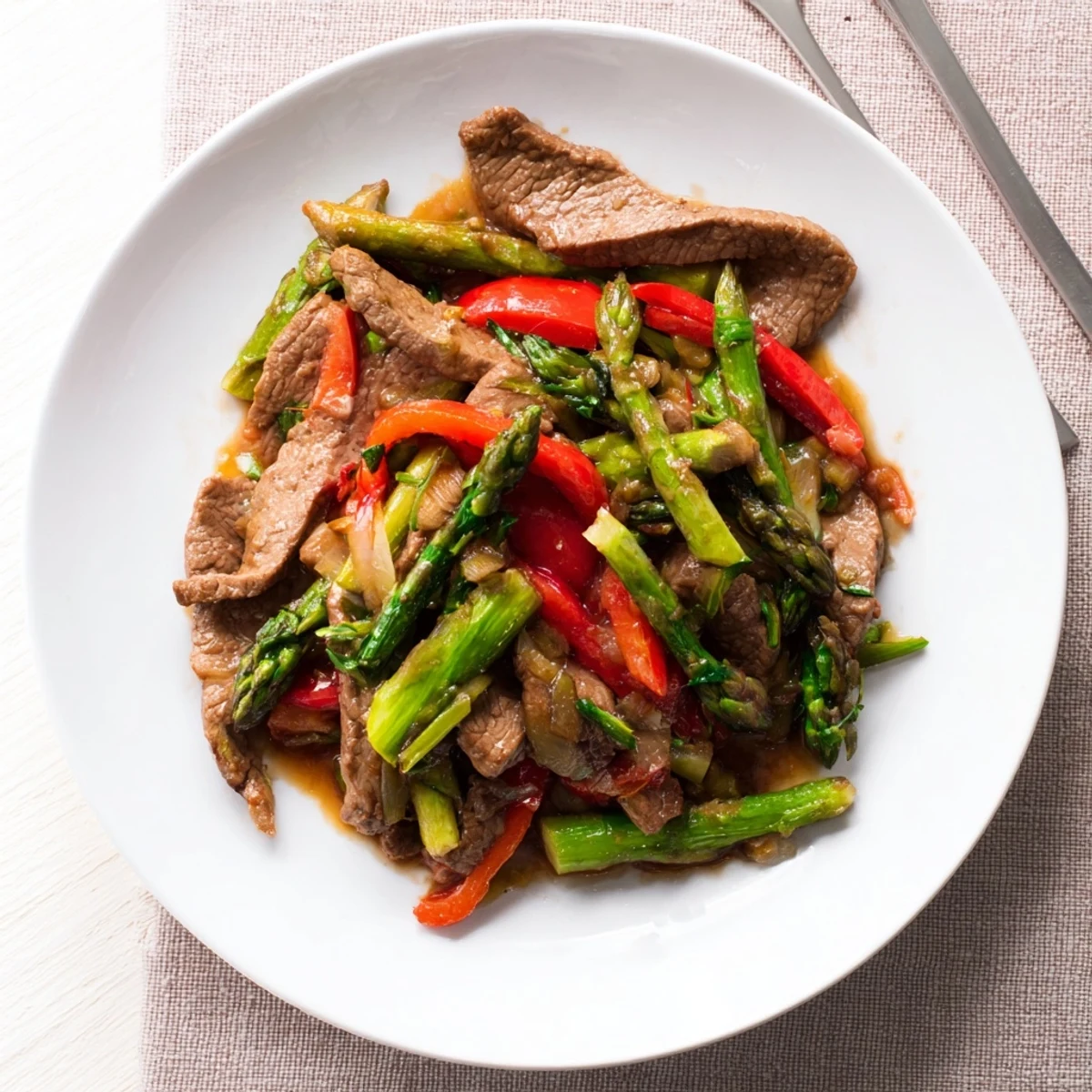
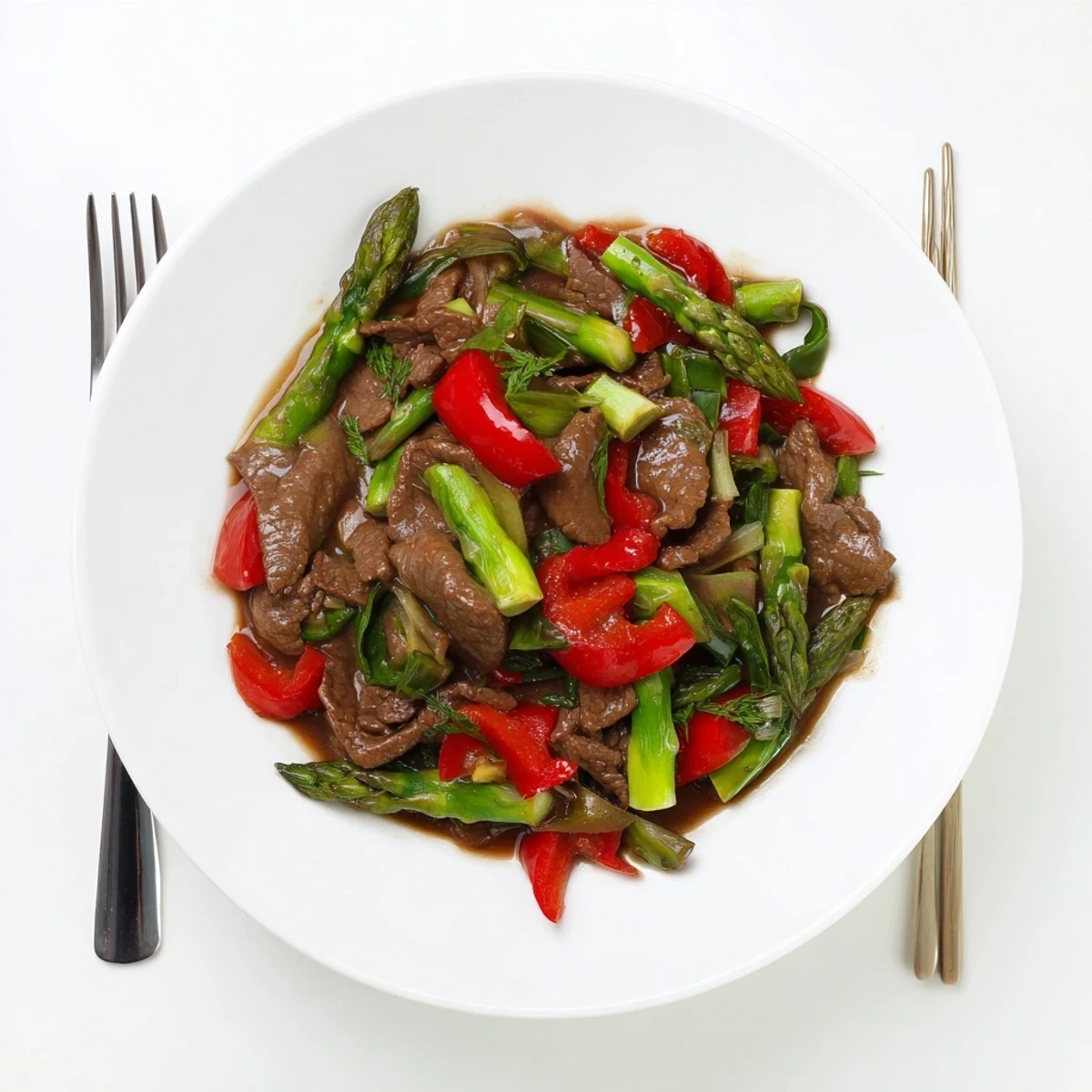
 This quick Asian-inspired dish combines thinly sliced beef sirloin with crisp-tender bok choy and asparagus, all coated in a rich soy-based sauce. The entire meal comes together in just 30 minutes, making it perfect for busy weeknights. The beef is quickly seared to develop a browned exterior while remaining tender, then reunited with vegetables that maintain their satisfying crunch.
The smell of garlic hitting hot oil still takes me back to my first apartment, where I'd stand on a chair to reach the stove's back burner. My stir-fry attempts were chaotic back then, vegetables flying everywhere, but somehow the mess always tasted like victory. This recipe is everything I wish I'd known then, distilled into something that actually works.
Last Tuesday, my roommate walked in mid-stir-fry and immediately asked what smelled so incredible. We ended up eating straight from the wok, standing over the stove, too hungry to bother with plates. That's the kind of dinner this is, the kind that pulls people into the kitchen.
Ingredients
- 400 g (14 oz) beef sirloin or flank steak, thinly sliced against the grain: Partially freezing the meat for 20 minutes makes paper-thin slices effortless and keeps the beef tender
- 1 large bunch bok choy (about 300 g / 10 oz), washed and chopped into 2-inch pieces: Separate the white stems from green leaves, adding stems first so everything finishes cooking together
- 200 g (7 oz) asparagus, trimmed and cut into 2-inch pieces: Snap off the woody ends by hand, they'll naturally break where the tough part begins
- 1 medium red bell pepper, sliced: The sweetness balances the salty soy sauce and makes the dish look gorgeous
- 2 cloves garlic, minced: Fresh garlic makes all the difference here, jarred stuff can turn bitter in high heat
- 2 tsp fresh ginger, grated: Peel it with a spoon to avoid wasting the flavorful flesh underneath
- 3 tbsp low-sodium soy sauce: Regular soy sauce makes the dish too salty, you can always add more later
- 1 tbsp oyster sauce: This creates that rich, restaurant-quality depth you can't get from soy alone
- 1 tbsp hoisin sauce: Optional but adds a subtle sweetness that rounds out the savory elements
- 2 tsp cornstarch: This is what makes the sauce glossy and clinging instead of thin and watery
- 1/4 cup (60 ml) water: Just enough to dissolve the cornstarch and create the right consistency
- 1 tsp sesame oil: A little goes a long way, this is for finishing fragrance not cooking
- 1/2 tsp sugar: Balances the saltiness and helps vegetables caramelize slightly
- 1/4 tsp freshly ground black pepper: Adds a gentle heat that lingers without overpowering
- 2 tbsp vegetable oil: Peanut or canola oil handles high-heat cooking better than olive
Instructions
- Whisk together your sauce first:
- In a small bowl, combine soy sauce, oyster sauce, hoisin sauce, cornstarch, water, sesame oil, sugar, and black pepper until completely smooth. Set it near the stove because once cooking starts, you won't have time to measure.
- Sear the beef over high heat:
- Heat 1 tablespoon of oil in a large wok or skillet until it's shimmering. Add the sliced beef and let it sear for 2-3 minutes, stirring just once or twice, until browned but still slightly pink inside. Remove it to a plate, leaving as much oil in the pan as possible.
- Bloom your aromatics:
- Add the remaining oil to the wok, then toss in the garlic and ginger. Stir constantly for 30 seconds, watching carefully, until the garlic turns golden and your kitchen fills with that incredible fragrance.
- Cook the tougher vegetables first:
- Add the asparagus and red bell pepper, stir-frying for 2-3 minutes. The asparagus should brighten in color and start to soften while still retaining a slight crunch.
- Add the quick-cooking greens:
- Toss in the bok choy stems first, then the leaves after 30 seconds. Stir-fry for about 2 minutes total, until the stems are crisp-tender and the leaves have just wilted.
- Bring it all together:
- Return the beef to the wok and pour the sauce over everything. Toss continuously for 2-3 minutes, until the sauce bubbles and thickens, coating each piece of beef and vegetable in a glossy sheen.
- Taste and adjust:
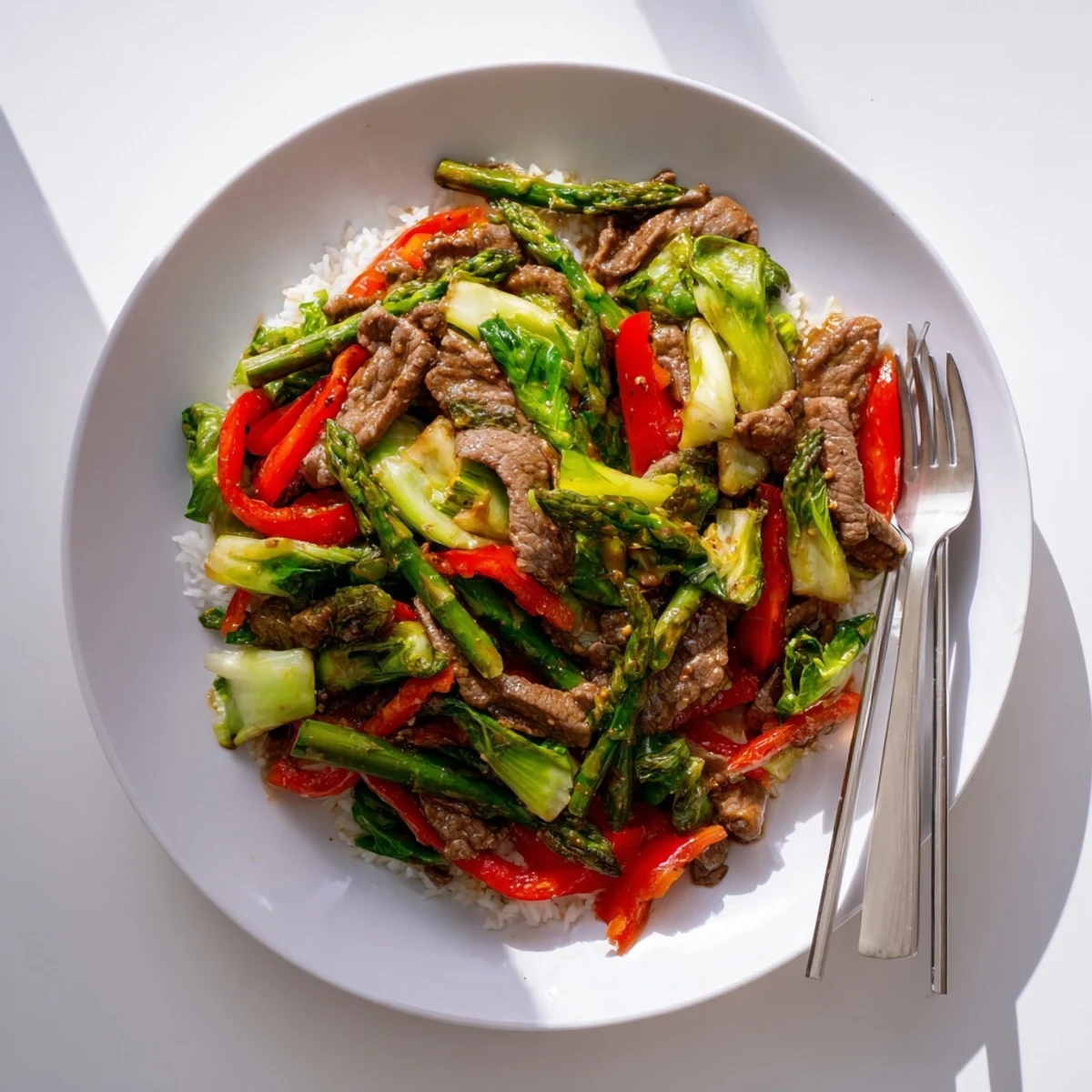
- Take a tiny bite and decide if it needs more salt, pepper, or sweetness. Serve immediately over steamed rice while the sauce is still clinging to everything.
 Save to Pinterest
 This recipe became my go-to during finals week in college, sustaining me through late nights of studying. Now it's what I make when friends need cheering up, or when Tuesday night feels like it needs saving.
Making It Your Own
Once you've made this a few times, you'll start instinctively knowing when to add each vegetable. That's when the magic happens, when you can look in the fridge and say 'that'll work' and actually mean it.
Getting The Sauce Right
The cornstarch needs to be completely dissolved before it hits the hot pan, or you'll end up with gloppy lumps. I whisk it into the cold liquid first, then whisk again right before pouring just to be safe.
The Art of High-Heat Cooking
Professional stir-fry happens over flame temperatures home stoves can't match, but the principle remains the same. Heat, speed, and constant movement are what create those caramelized edges and tender-crisp vegetables.
- Have a serving platter ready before you start cooking
- Don't be afraid of the smoke slightly, it means you're doing it right
- Everything continues cooking after it leaves the pan, so slightly undercook rather than overcook
 Save to Pinterest
 Garnish with toasted sesame seeds or sliced green onions if you want it to look as good as it tastes. Best eaten immediately, standing up if necessary, surrounded by people you love.
Common Questions
- → Can I use a different cut of beef?
-
Yes, flank steak or sirloin work best due to tenderness. Always slice against the grain for the most tender results.
- → How do I prevent the sauce from becoming too thick?
-
If the sauce thickens too much, simply add a tablespoon of water while stir-frying to reach your desired consistency.
- → Can I make this gluten-free?
-
Absolutely. Substitute regular soy sauce with tamari or certified gluten-free soy sauce, and verify your oyster and hoisin sauces are gluten-free.
- → What vegetables can I add or substitute?
-
Snap peas, sliced mushrooms, broccoli florets, or baby corn all work beautifully. Adjust cooking times to maintain crisp-tender texture.
- → Can I prepare the sauce in advance?
-
Yes, whisk the sauce ingredients together up to 24 hours ahead and store refrigerated in an airtight container. Give it a quick stir before using.
- → What should I serve with this stir-fry?
-
Steamed jasmine rice is traditional, but noodles, quinoa, or cauliflower rice are excellent lighter alternatives.